Lee is the founder of Singapore, and the way he observes the world tells us what makes a country thrive and become more competitive. Several key factors I learn from this book are summarized below:
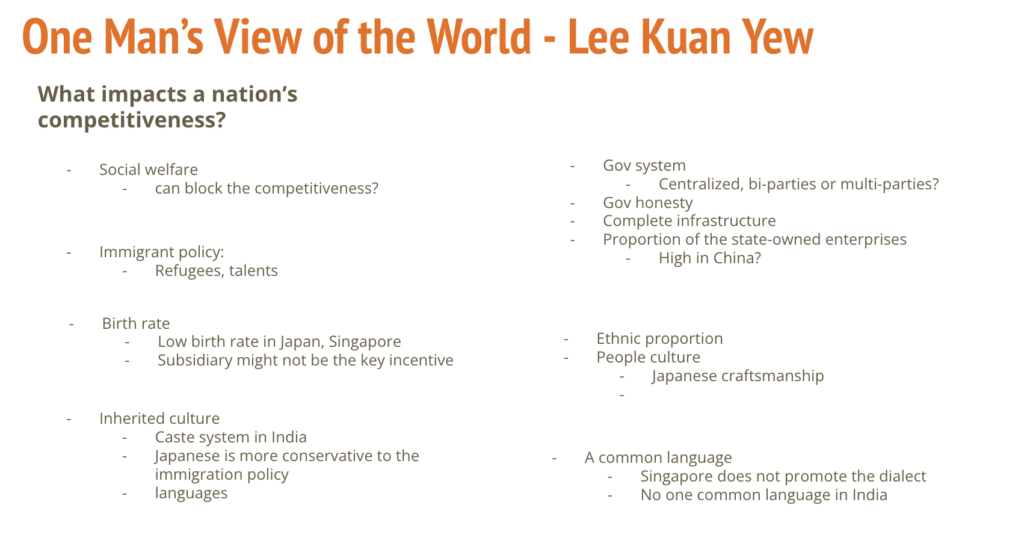
Birth Rate, Immigrant Policy, and Inherent Culture
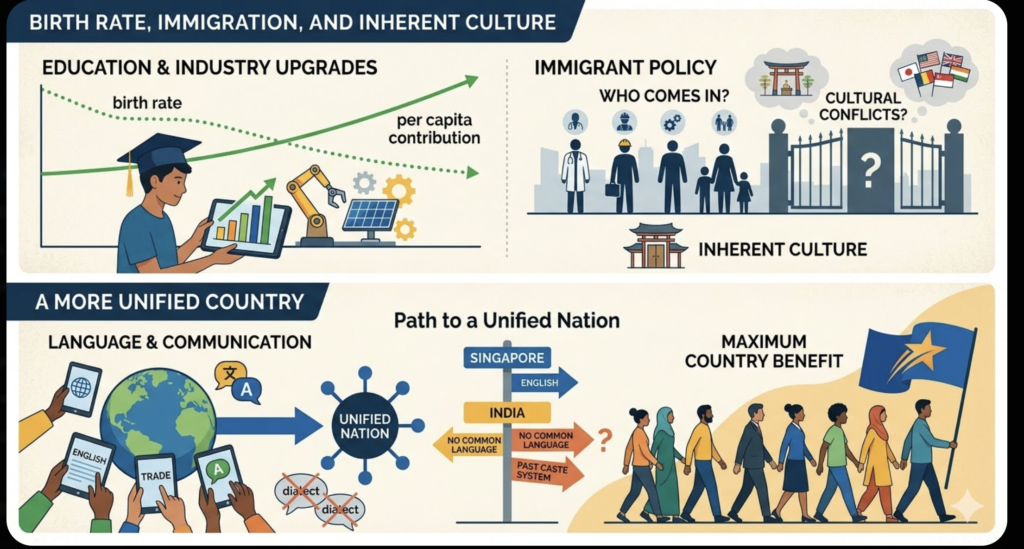
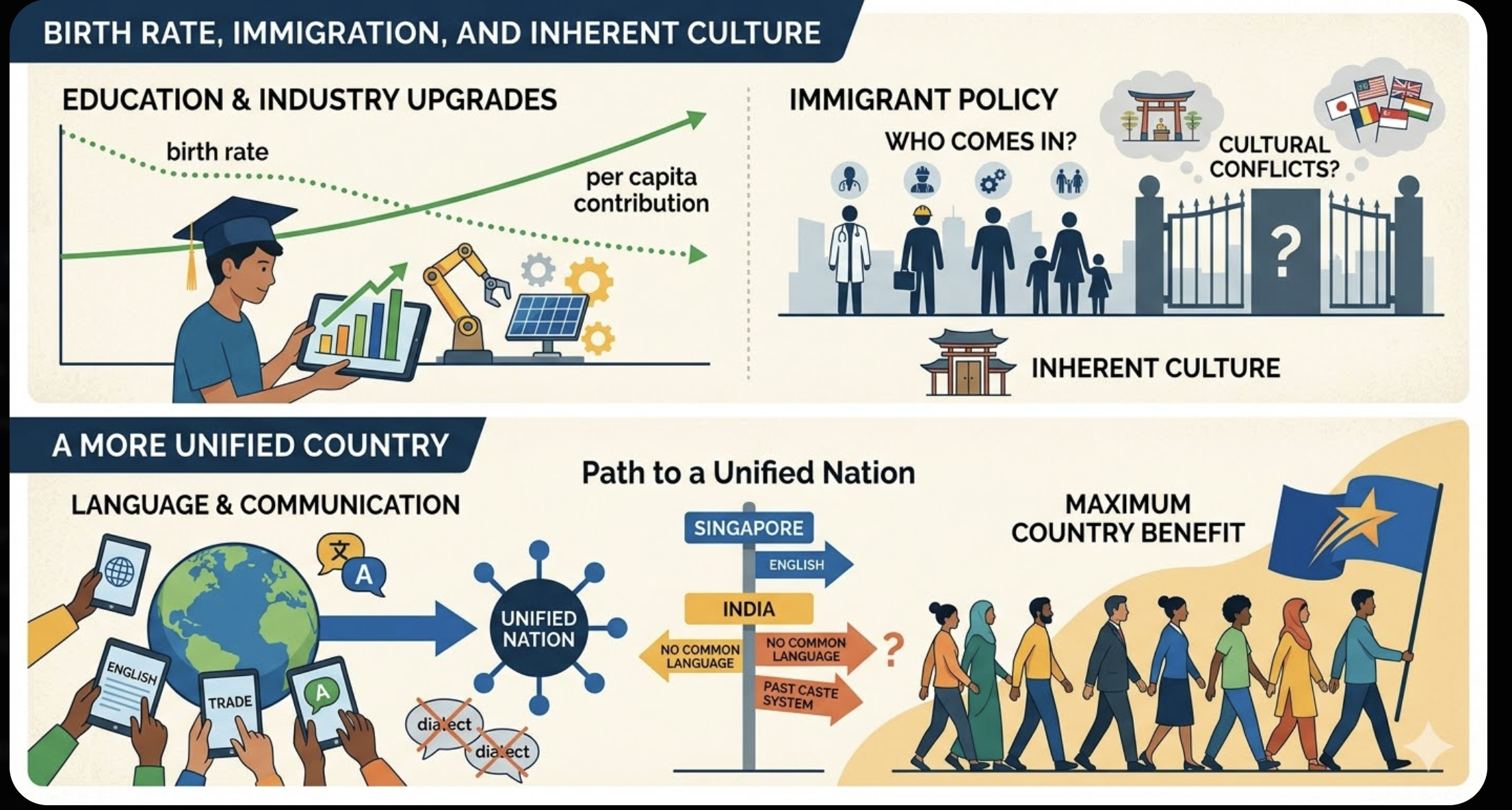
Though a low birth rate reduces a country’s total population, the economy is not fully constrained, in my opinion. Through a well-designed education system and industry upgrades, each person’s economic contribution grows. It is definitely good to have more well-educated people to contribute to a country’s economy. But if raising the birth rate is difficult in the short term, education and industry upgrades can mitigate the impact on the economy.
Immigrant policy is another way to deal with the low birth rate challenge. What matters is who comes in: talents or another potential social burden? Will they bring cultural conflicts to the existing society? These are all the questions we have to think about. Lee mentioned that Japan is more conservative toward immigrants due to its inherent culture.
A More Unified Country
A more unified country means better communication among its people, and everyone has the same purpose to pursue the maximum benefit of the country. Language is one of the essential indices. This was why dialect was not supported in Singapore and why English was chosen as the main language: it can unite different groups of people and is easier to connect with global trade activities. For India, the caste system in the past and no single common language have brought the challenge to becoming a more unified country.
In my opinion, a diversified society with a highly unified recognition of the country could be the best result. Diversity is the source of innovation when working in harmony. Innovation ignites the growth of the country’s economy. The key is how to make a diversified groups of people work together.